• Skip to primary navigation
  • Skip to main content
  • Skip to footer
Microscopes for Schools

Microscopes for Schools

  • Welcome
  • About Us
  • M4S Competition
  • DIY Microscopy
    • Equipment and suppliers
  • Contact
    • M4S Cambridge
    • M4S Manchester
    • M4S Birmingham

Activity Sheet

Pond Life

Observing life from a pond

Compound microscope activity sheet
Materials

  • Glass microscope slides
  • Plastic cover slips
  • Paper towels or tissues
  • Samples of protists and/or volvox
  • Plastic pipette or dropper

Methods

1. Place a drop of pond water or commercially bought Volvox or protozoa on a microscope slide with a pipette or dropper.

Tips:

  • Too small a drop may result in the specimens being crushed, so be prepared to make another slide if necessary.
  • Larger volvox can be prevented from being crushed using a chamber made of tape (see next page).
  • A stereomicroscope may be helpful in finding organisms for transferring to a slide.


2. Place a coverslip on top and observe

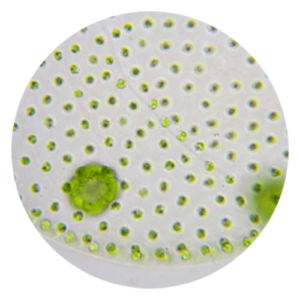
Protists or Protozoa are a diverse group of eukaryotic microorganisms. They often have little in common besides a relatively simple organisation: either they are unicellular, or they are multicellular without specialised tissues (e.g. Volvox). Many protists are photosynthetic and are vital primary producers in ecosystems, particularly in the ocean as part of the plankton (phytoplankton). Other protists, such as the Kinetoplastids and Apicomplexa, are responsible for a range of serious human diseases, such as malaria and sleeping sickness.

Fun fact:

The phytoplankton in the oceans produces most of the oxygen of the Earth’s atmosphere – about half of the total amount produced by all plant life.


Making a Chamber with Tape

This method can be used when imaging relatively thick samples (e.g. Daphnia or Volvox), which will probably be damaged when mounted directly between a coverslip and a slide.
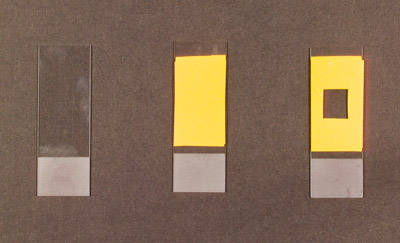
  1. Place one to three layers of electrician’s tape on a microscope slide (the number of layers depends on the thickness of the sample you are imaging).
  2. Using a Stanley knife, razor blade or scalpel, carefully score an approximately 1 cm by 1 cm square in the layers of tape.
  3. Peel away the central square of tape to make the chamber.
  4. Add the sample in a drop or two of liquid.
  5. Gently place a coverslip on the sample.
  6. Wick away any excess liquid by inserting tissue paper next to the cover slip.
Download PDF
How to operate compound microscopes
Equipment and Suppliers

Yoghurt bacteria

Yoghurt bacteria

Compound microscope activity sheet

Materials

  • Glass microscope slides
  • Plastic cover slips
  • Yogurt with live culture (eg: Actimel, Activia, Yakhult)
  • Toothpicks
  • Paper towels or tissues
  • Methylene blue solution (0.5 to 1%) Optional

Methods

  1. Take a very small drop of yogurt with the toothpick and smear it for 2 to 3 seconds on the slide.
  2. Place a small drop of methylene blue solution on a microscope slide (optional, you will be able to see the bacteria even without using the stain). Wear gloves and do NOT allow children to handle methylene blue solution.
  3. Place a coverslip on top. Remove excess solution around the coverslip with a paper towel or tissue.
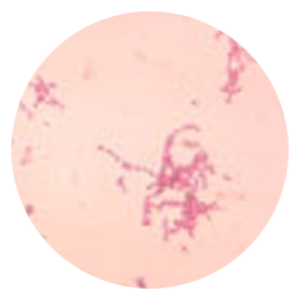
  4. View in the compound microscope at 4 x or 10 x initially, before moving to higher magnification. Bacteria will appear small even at the highest magnification.

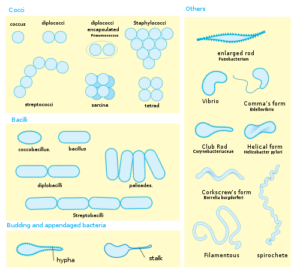
Bacteria can be found isolated, in pairs (diplo), in clusters or in threads (strepto), and they can have different shapes like rods (bacilli), sphere (coccus) etc.

Yogurt is made from the fermentation of the lactose in milk by the rod-shaped bacteria Lactobacillus delbrueckii subsp. bulgaricus to produce lactic acid, which acts on milk protein to give yoghurt its texture and its characteristic acidic taste. Other bacteria found in yoghurt are Lactobacillus acidophilus or casei, Streptococcus salivarius subsp. thermophilus and Bifidobacterium bifidus.

Fun fact:

There are 10 times more bacteria in our guts than there are cells in our body.

Download PDF
How to operate compound microscopes
Equipment and Suppliers

Human cheek cells

Human cheek cells

Compound microscope activity sheet

Materials

  • Glass microscope slides
  • Plastic cover slips
  • Paper towels or tissue
  • Methylene Blue solution (0.5% to 1% (mix approximately 1 part stock solution with 4 parts of water))
  • Plastic pipette or dropper
  • Sterile, individually packed cotton swabs

Methods

  1. Take a clean cotton swab and gently scrape the inside of your mouth.
  2. Smear the cotton swab on the centre of the microscope slide for 2 to 3 seconds.
  3. Add a drop of methylene blue solution and place a coverslip on top. Concentrated methylene blue is toxic if ingested. Wear gloves and do NOT allow children to handle methylene blue solution or have access to the bottle of solution.
  4. Remove any excess solution by allowing a paper towel to touch one side of the coverslip.
  5. Place the slide on the microscope, with 4 x or 10 x objective in position and find a cell. Then view at higher magnification.

Fun facts:

Methylene blue stains negatively charged molecules in the cell, including DNA and RNA. This dye is toxic when ingested and it causes irritation when in contact with the skin and eyes.

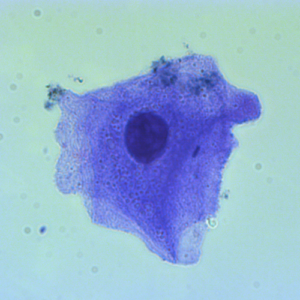
The cells seen are squamous epithelial cells from the outer epithelial layer of the mouth. The small blue dots are bacteria from our teeth and mouth.

Download PDF
How to operate compound microscopes
Equipment and Suppliers

Elodea

Elodea (pondweed) cells

Compound microscope activity sheet

Materials

  • Glass microscope slides
  • Plastic cover slips
  • Paper towels or tissues
  • Salt solution (6 g salt dissolved in 100 ml of water or approx. 2 teaspoons salt in a cup of water)
  • Elodea
  • Water

Methods

  1. Pick off an entire healthy looking Elodea leaf, with fingers or small scissors and place it on the microscope slide.
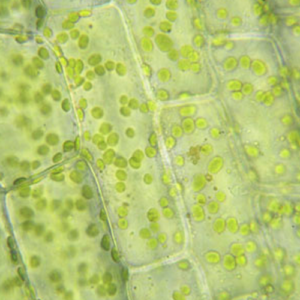
  2. Add a drop of water (hypotonic solution) and a coverslip and observe the chloroplasts (green structures) and the cell walls.
  3. Add a drop of salt solution (hypertonic solution) to the side of the coverslip and observe the cell shrinking (optional).

Fun facts:

When the salt solution is added, the salt ions outside the cell membrane cause the water molecules to leave the cell through the cell membrane causing it to shrink into a blob in the centre of the cell wall. The movement of water molecules is called osmosis.

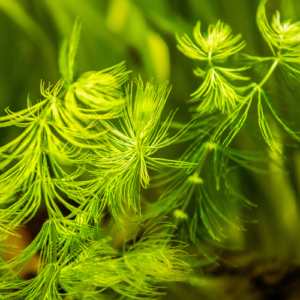
Elodea is a genus of submerged aquatic plants used in aquariums. You should be able to buy this from pet shops. If not, you can purchase it from a school supplier. Elodea canadensis is a species that works well for this activity, because it has thin, straight leaves. However, most other species are satisfactory.

Download PDF
How to operate compound microscopes
Equipment and Suppliers

Banana cells

Banana cells

Compound microscope activity sheet

Materials

  • Pasteur pipette
  • Unripe banana
  • Microscope slides
  • Cover slips
  • Paper towels
  • Lugol Solution
  • Tooth pick

Methods

  1. Smear a little (less than the size of a sesame seed) of an unripe green banana on a microscope slide to rub the cells apart.
  2. Place a drop of Lugol solution on top of the banana smear.
  3. Place a coverslip on top and remove the excess of solution with a tissue.
  4. Place the slide on the microscope, with 4 x or 10x objective in position and find a field of view containing the cells. Then view at higher magnifications.

Fun fact:

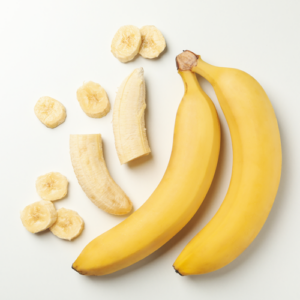
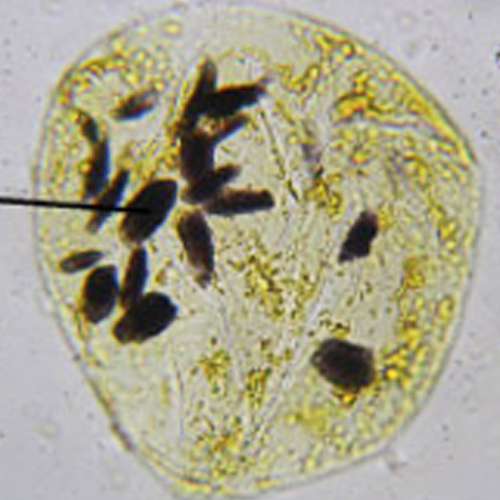
These cells contain starch grains that are stained by the common laboratory chemical – Lugol solution. Lugol solution is a solution of iodine and potassium iodide in water and it is used as an indicator test for the presence of starches, with which it reacts by turning a dark-blue/black. This solution, first made in 1829, is named after the French physician J.G.A. Lugol and is often used as an antiseptic and disinfectant.

Starches include the plant starches amylose and amylopectin and glycogen in animal cells. Lugol’s solution will not detect simple sugars such as glucose or fructose; that’s why unripe bananas are best for visualisation of starch granules.

Lugol solution is not hazardous, however, contact with skin and eyes should be avoided and the solution should not be ingested.

Download PDF
How to operate compound microscopes
Equipment and Suppliers

Water Flea

Water flea Daphnia pulex

Compound microscope activity sheet

Materials

  • Glass microscope slides with pre-prepared chamber of electrical tape.
  • Plastic cover slips
  • Paper towels or tissues
  • Pasteur pipette or dropper
  • Daphnia pulex collected from a pond/stream or acquired commercially.
  • Petri dish (optional)

Methods

  1. Suck up some of the water containing Daphnia with the dropper or pipette and place in a petri dish if available (if not, proceed to 3). This can by tricky for small children, but is fun trying.
  2. Look at the Daphnia with a stereomicroscope if available.
  3. Place the Daphnia (in a small drop of water) in the microscope slide with the pre-prepared tape chamber.
  4. Gently place a coverslip on top of the Daphnia without pressing. The Daphnia should live for a while like this, as long as there is the right amount of water on the slide. View with 4x or 10x objectives on a compound microscope and adjust focus carefully to see different features.

Tip:

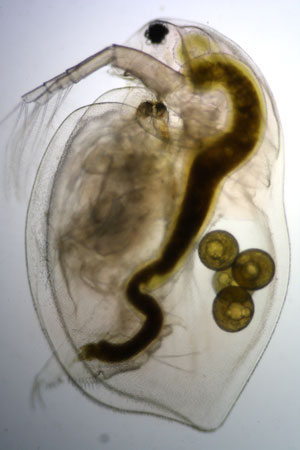
  • Many features of the Daphnia are spectacular, pay attention to the beating heart, eyes and surface of the animal (where individual cells are clearly visible).

Fun facts:

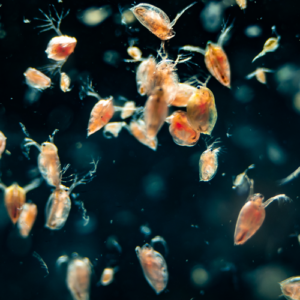
Female Daphnia do not always need a male to have offspring; they can have babies on their own!

Daphnia can survive harsh conditions such as a dry spell if their pond dries up for a while, and they can sometimes even survive freezing


Making a Chamber with Tape

This method can be used when imaging relatively thick samples (e.g. Daphnia or Volvox), which will probably be damaged when mounted directly between a coverslip and a slide.

  1. Place one to three layers of electrician’s tape on a microscope slide (the number of layers depends on the thickness of the sample you are imaging).
  2. Using a Stanley knife, razor blade or scalpel, carefully score an approximately 1 cm by 1 cm square in the layers of tape.
  3. Peel away the central square of tape to make the chamber.
  4. Add the sample in a drop or two of liquid.
  5. Gently place a coverslip on the sample.
  6. Wick away any excess liquid by inserting tissue paper next to the cover slip.
Download PDF
How to operate compound microscopes
Equipment and Suppliers

Footer

  • Contact Us
  • Privacy & Cookies

Microscopes4Schools is sponsored by

MRC LMB logo
Lister institute logo
Brunel Microscopes logo
© 2025 · at the MRC Laboratory of Molecular Biology